Education is often framed as a mirror reflecting the current state of our society. However, Dr. Carl Ivan Villanueva, Director of UB Distance Education, prefers to view it as a window; one we must throw wide open to let the future in. As the University of Batangas celebrates its 80th founding anniversary, this window reveals a world that needs fixing, but it also showcases a community ready to build a sustainable future.
“We must move beyond the luxury of privileged seclusion. The real world is not waiting for you to graduate; it is happening right now outside these walls. Education is the vehicle, the Sustainable Development Goals are the roadmap, but your passion is the fuel.”
— Hon. Ricarte B. Abejuela III, Director, United Nations and International Organizations, DFA
A Foundation Built for a Sustainable Future
In the world we are navigating today, the sheer number of challenges can feel staggering. Between economic instability and the “poly-crisis” mentioned by our speakers, the weight of the current educational crisis often seems overwhelming. It is easy to feel that these global problems are simply too much for one institution to handle.
However, the University President, Lily Marlene J. Hernandez-Bohn, reminded the audience that the University of Batangas was born for such a time as this. During her opening remarks, she noted a striking historical parallel: the United Nations and the University of Batangas are both 80 years old. Both were founded in the wake of the Second World War to bring order, hope, and progress to a broken world.
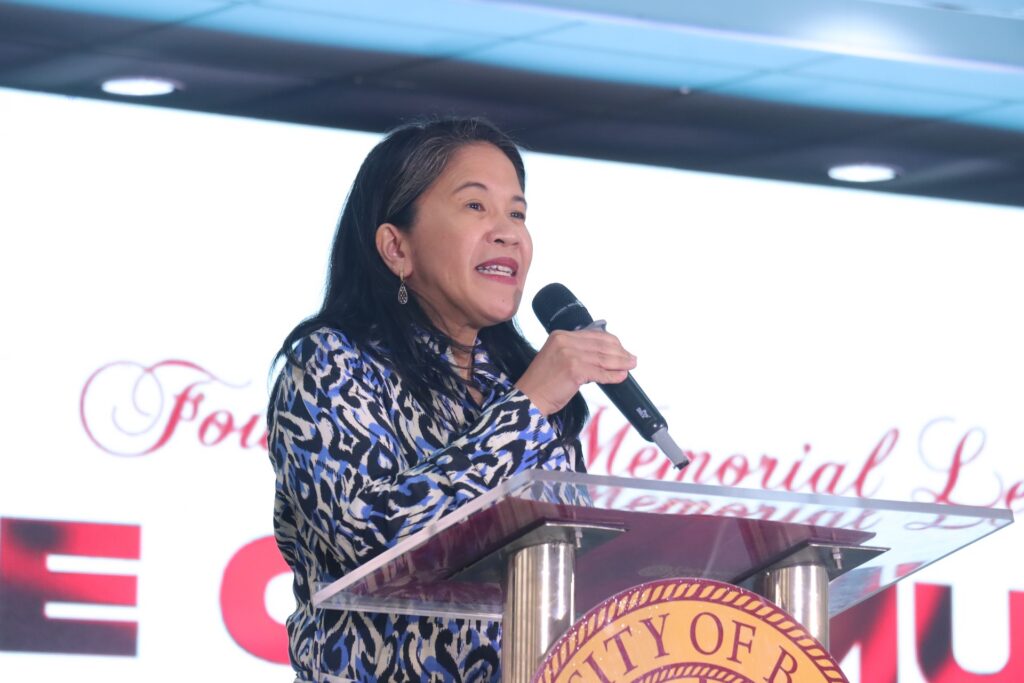
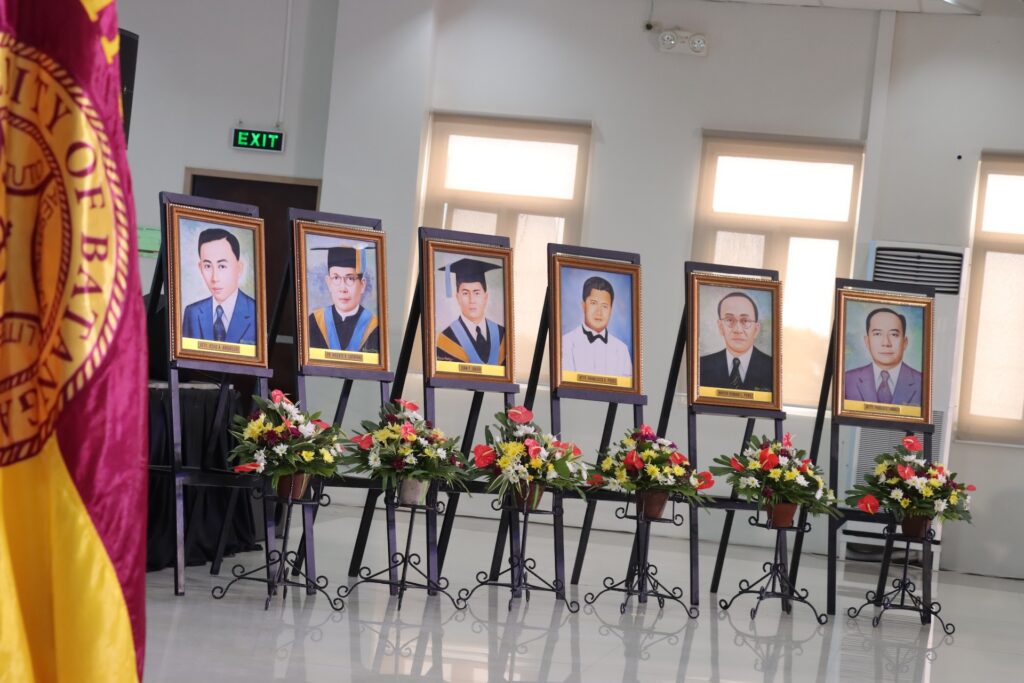
“Moments like this invite us not only to gather as an academic community, but also to reflect on the foundations upon which our institution was built… Foundations shaped by vision, sacrifice, and a strong belief in the power of education. For eight decades, UB has carried forward the ideals of its six founders. These visionary men believed that education must go beyond the mere transmission of knowledge. They saw it as a transformative force that forms character and inspires individuals to serve a purpose greater than themselves.”
This legacy acts as our compass as we navigate the complexities of the 21st century.
The Birth of Sustainable Future Global Goals for 2030
When one era falls, a new one must rise. As the Second World War concluded and the world required urgent fixing, institutions like the United Nations were built to safeguard humanity. They provide inspiration and serve as a constant reminder that an international body exists to uphold peace, protect human rights, and deliver humanitarian aid. Today, that mission has evolved into a global blueprint known as the Sustainable Development Goals (SDGs).
Adopted by the UN in 2015, the SDGs are a universal call to action to end poverty, protect our planet, and ensure prosperity for all by 2030. These “Global Goals” consist of 17 interconnected objectives and 169 specific targets. They are designed to balance social, economic, and environmental sustainability, ensuring that progress in one area does not come at the expense of another. However, as 2030 approaches, the world faces a “poly-crisis” that threatens to derail this vision of a sustainable future.
Why Education is the Ultimate Inheritance
To help us navigate this complex landscape, the lecture welcomed Hon. Ricarte B. Abejuela III, Director of United Nations and International Organizations at the DFA. His discussion, “SDG Synergy: Building Sustainable Futures Through Education,” brought these high-level global targets down to a deeply personal level. He began by challenging our traditional Filipino understanding of education as an “Inheritance.”
Director Abejuela III referenced the common sentiment of Filipino parents
“Edukasyon lang ang tanging maipamana ko sa inyo.”
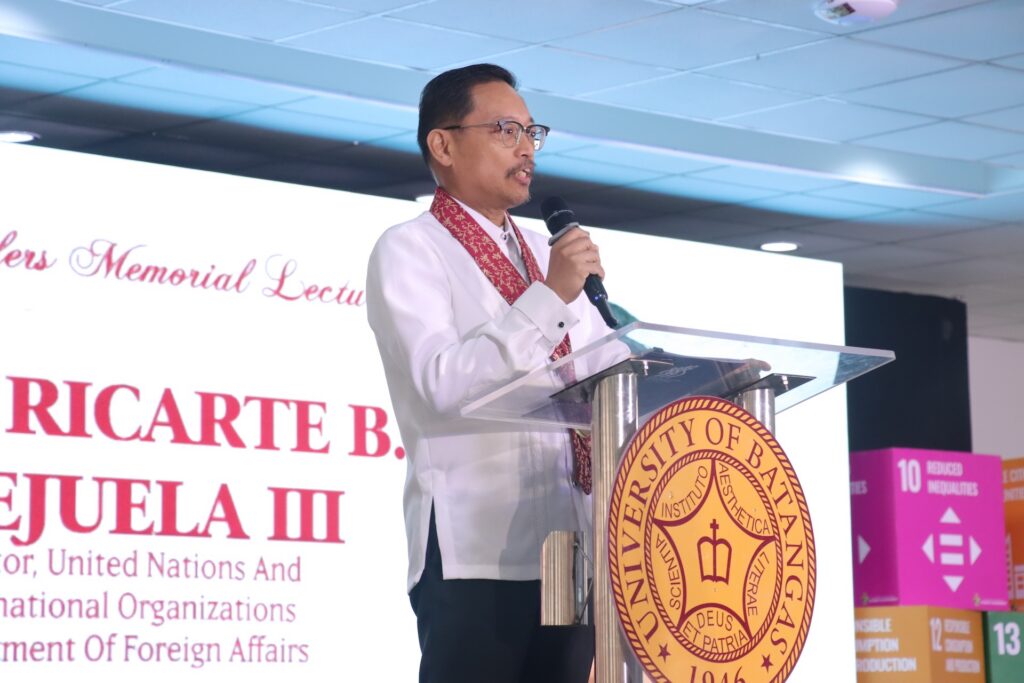
He argued that this is not just a cliché, but a socioeconomic reality. Education is the only asset that cannot be stolen by thieves or destroyed by the typhoons that increasingly batter our archipelago. In today’s interconnected world, simply getting a degree to find a job is only half the battle.
The True Meaning of ‘Pagkatuto’
The Director made a sharp distinction between schooling (pag-aaral) and true education (pagkatuto). While schooling involves uniforms and diplomas, true education is a lifelong process of transformation. To build a sustainable future, Director Abejuela III emphasized three critical pillars of learning:
- Critical Thinking: The ability to differentiate truth from fake news in an age of AI and algorithms.
- Cultivated Empathy: Seeing the plight of the marginalized and understanding the “hidden” struggles of our community.
- Willingness to Act: Turning knowledge into active citizenship, because knowledge without action is merely trivia.
Becoming a ‘Good Ancestor’
Director Abejuela III distilled the UN’s complex jargon into one powerful concept: being a “good ancestor”. Sustainable development is the mindset that we should meet our needs today without stealing from our children. He visualized this as a three-legged stool consisting of Economic Growth, Social Inclusion, and Environmental Protection. If one leg is missing, the entire structure of our society falls.
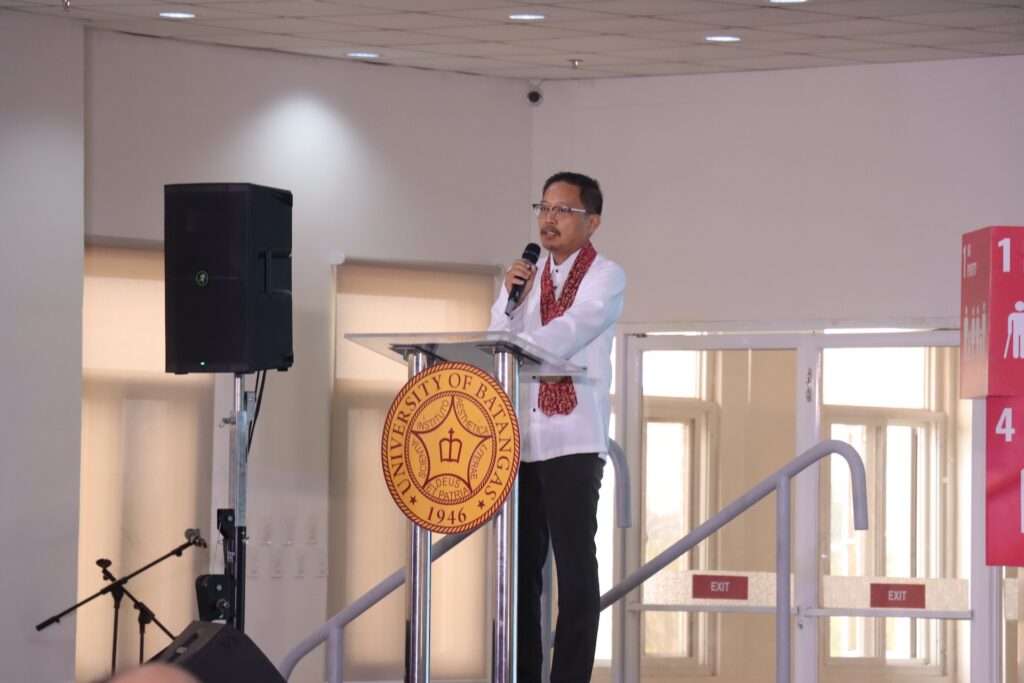
Currently, the Philippines ranks 87th out of 167 countries in SDG progress. While we have made strides in responsible consumption, we still lag in health and quality education. The Director’s message was a clarion call to the UBian community: we cannot continue with “business as usual.” We must use our education to become architects of a better world, ensuring we leave a healthy planet for the next generation.
The ASEAN Spirit Bridging Local Roots and a Sustainable Future Vision
Before we can understand our place in the world, we must understand our neighborhood. The Association of Southeast Asian Nations (ASEAN), established in 1967, serves as a cornerstone of regional stability and cooperation. Comprising ten member states, ASEAN aims to accelerate economic growth, social progress, and cultural development through a spirit of equality and partnership. It is a community built on the principle that by standing together, the nations of Southeast Asia can secure a sustainable future for nearly 700 million people.
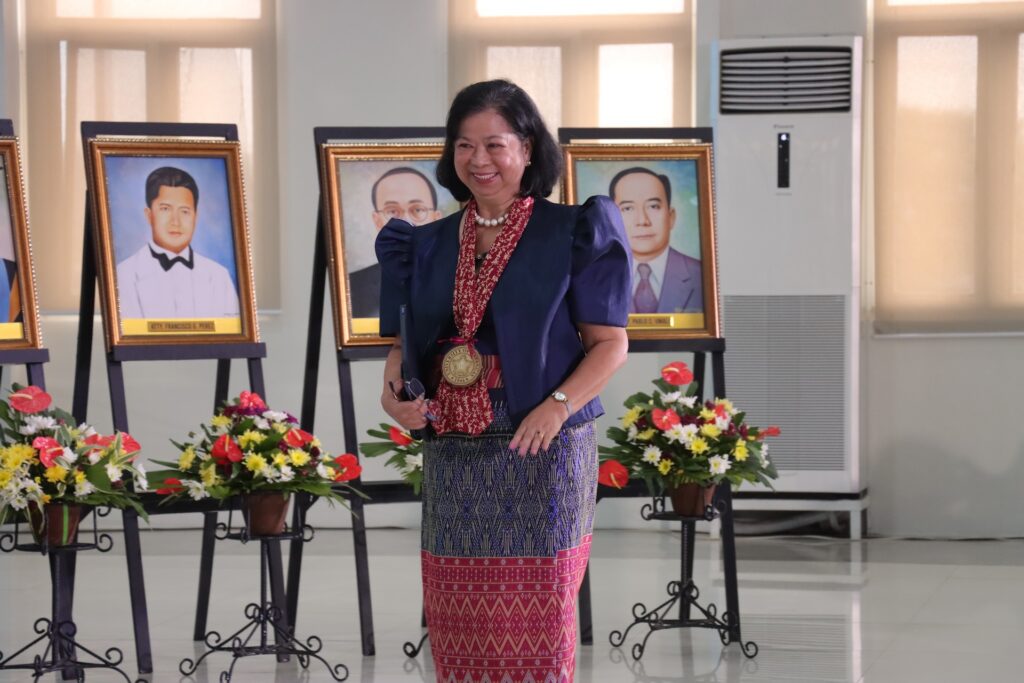
To bring this regional vision home to the University of Batangas, the lecture welcomed a true giant in the field of international relations: Ambassador Elizabeth P. Buensuceso. As the Philippine Eminent Person to the High-Level Task Force on the ASEAN Community’s Post-2025 Vision, her presence was a masterclass in how global diplomacy impacts the individual. Her topic, “Foreign Policy, Diplomacy, ASEAN and Me,” served as a personal invitation for every student to see themselves as a diplomat in their own right.
The Batangueño Legacy in Diplomacy
Ambassador Buensuceso immediately connected with the audience by highlighting Batangas’ deep diplomatic roots. She reminded the students that the first-ever Secretary of Foreign Affairs was the Batangueño hero, Apolinario Mabini. Despite his physical limitations, it was his intellect and vision that first introduced our young republic to the world stage.
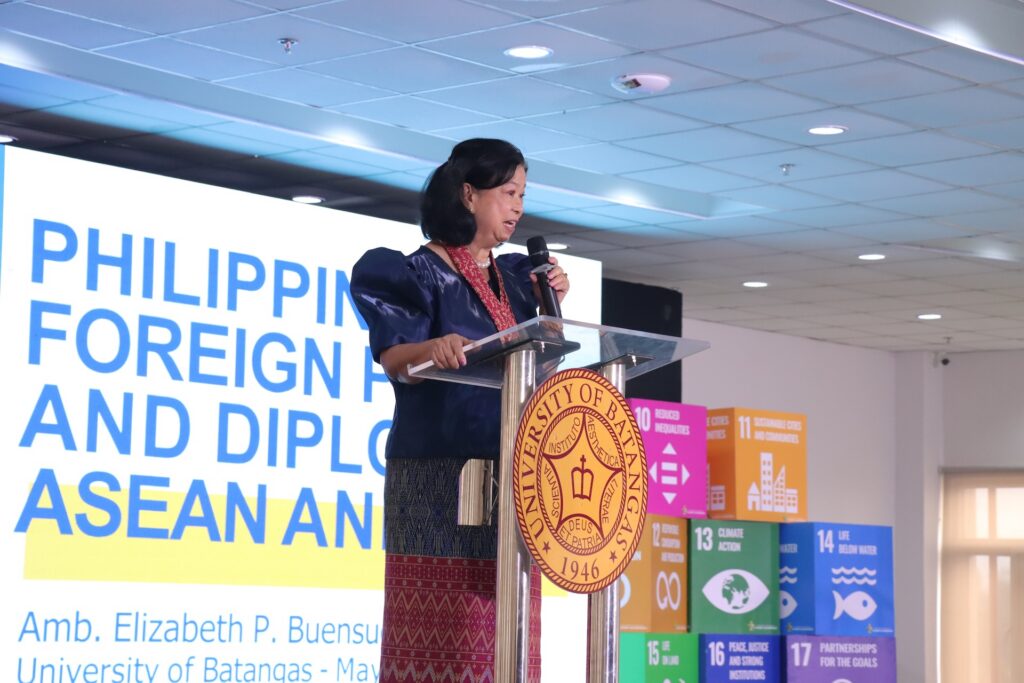
There are many Batangueños in the Department of Foreign Affairs, she noted, citing Ambassador Johnny Ona as an epitome of dignity and integrity. Her message was clear: being a probinsyano is no barrier to global leadership. In fact, the grit and values formed in our local communities are exactly what the Philippine Foreign Service needs.
Demystifying Foreign Policy and Diplomacy
For many,“Foreign Policy” sounds like a distant academic concept. The Ambassador simplified it to a practical set of principles and positions that a country adopts to protect its national interests. She framed diplomacy not just as high-level negotiations but as the art of navigating a world of “poly-crisis.”
In a candid and refreshing moment, the 71-year-old Ambassador shared her personal contribution to a sustainable future. Proving that age is no barrier to innovation, she revealed how she modernized the DFA’s workflows:
Since 2010, she has abolished thick paper briefings in favor of Google Drive to reduce waste and she surprised the students by sharing that she actively uses Canva for her presentations, demonstrating that sustainability often starts with digital literacy.
ASEAN and ‘Me’: Your Role in the Vision
The most intriguing part of her talk focused on the “Me” in the title. Ambassador Buensuceso emphasized that every Filipino – especially the youth – is a stakeholder in the ASEAN Community. As the region looks toward its Post-2025 Vision, the goal is to create a more inclusive, resilient, and human-centric community.
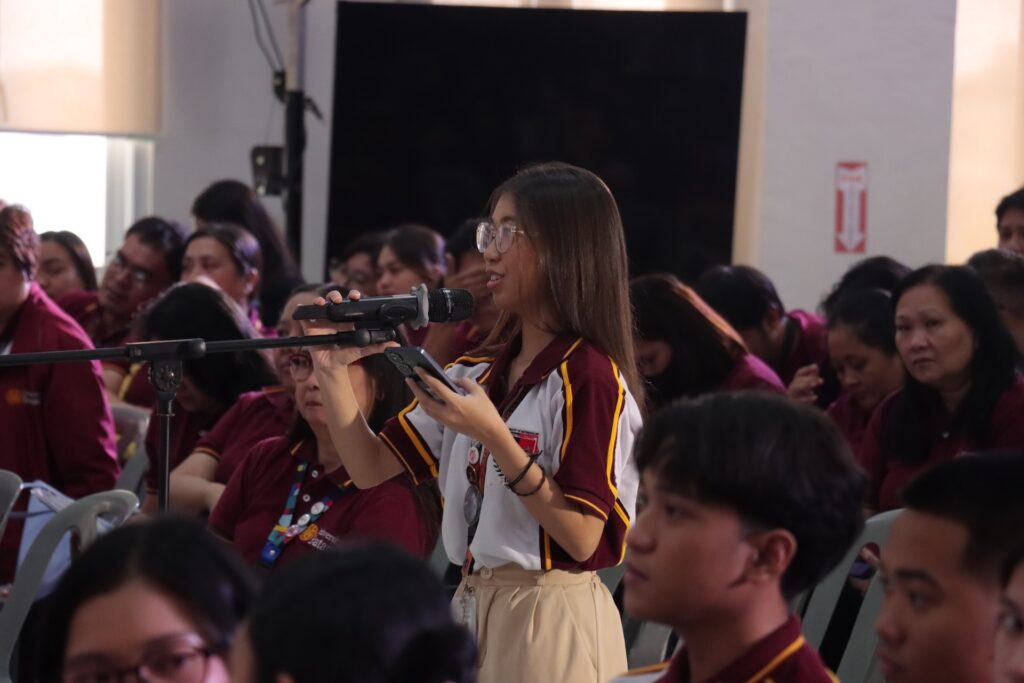
She challenged the students to move beyond the four walls of the classroom and look toward the horizon. Whether through understanding regional trade or practicing sustainable habits, every individual’s actions contribute to the nation’s “soft power.”
By the end of her session, the luxury of privileged seclusion was replaced by a sense of duty. The Ambassador didn’t just teach the students about treaties; she inspired them to carry the Batangueño spirit into the international arena, ensuring that the legacy of Mabini continues to thrive in a sustainable future.
A Collective Commitment to a Sustainable Future Tomorrow
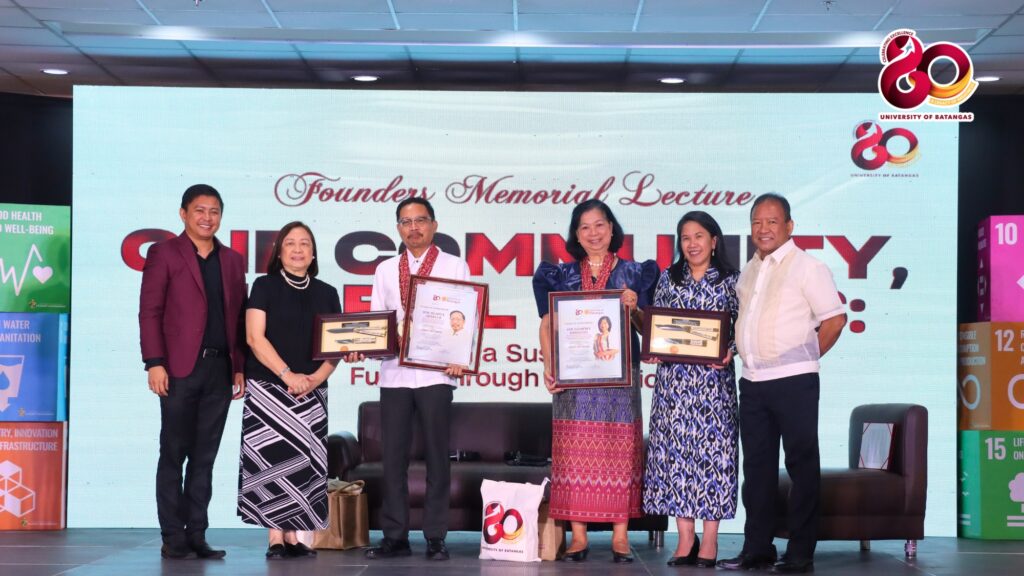
As the curtains drew to a close on this significant chapter of our 80th anniversary celebration, Atty. Jesus V. Mayo, Chairman of the Board of Regents, offered a powerful synthesis of the day’s insights. His closing remarks served as a reminder that the lofty ideals of global diplomacy and the academic rigor of our classrooms must converge into a single, unified force.
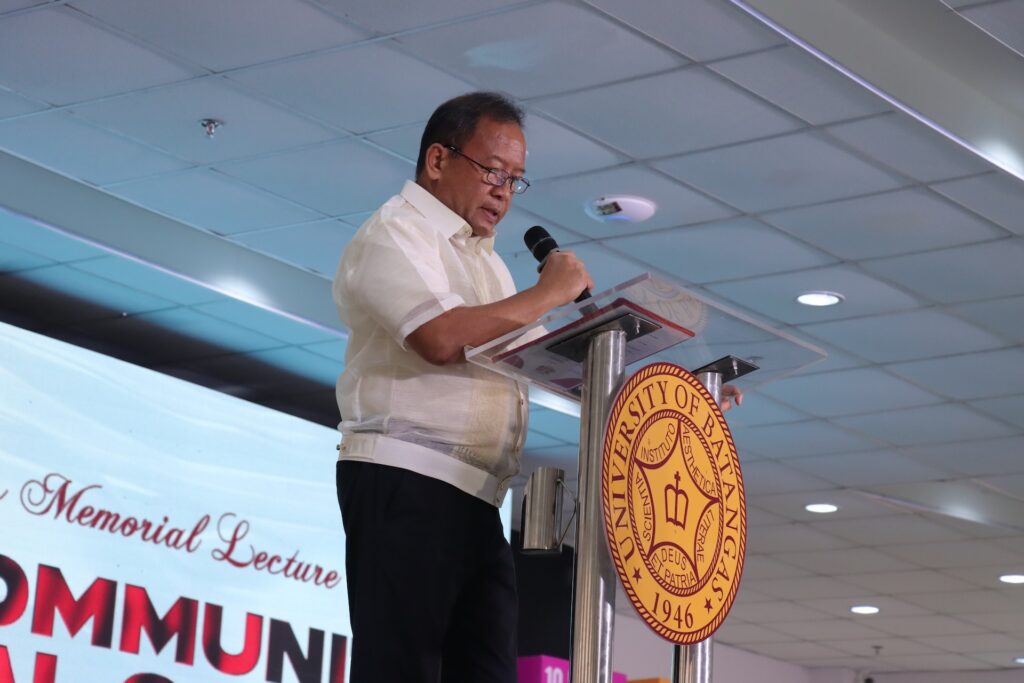
Atty. Mayo emphasized that education does more than just fill minds; it cultivates informed and empowered citizens. When we combine this empowerment with the strategic reach of foreign policy and the regional cohesion of ASEAN, we create a resilient foundation for the Philippines. Today’s lecture underscored a vital truth: sustainable development cannot be achieved by a single sector alone. It requires the collective heartbeat of every individual and institution working in harmony.
A Legacy of Educating Today for Tomorrow
The Founders’ Memorial Lecture Series is more than a tradition; it is a reaffirmation of the vision set forth by our six founding fathers. This event marks the fourth lecture in a series that commenced in January, each month bringing us closer to the heart of what it means to be a UBian in the 21st century.
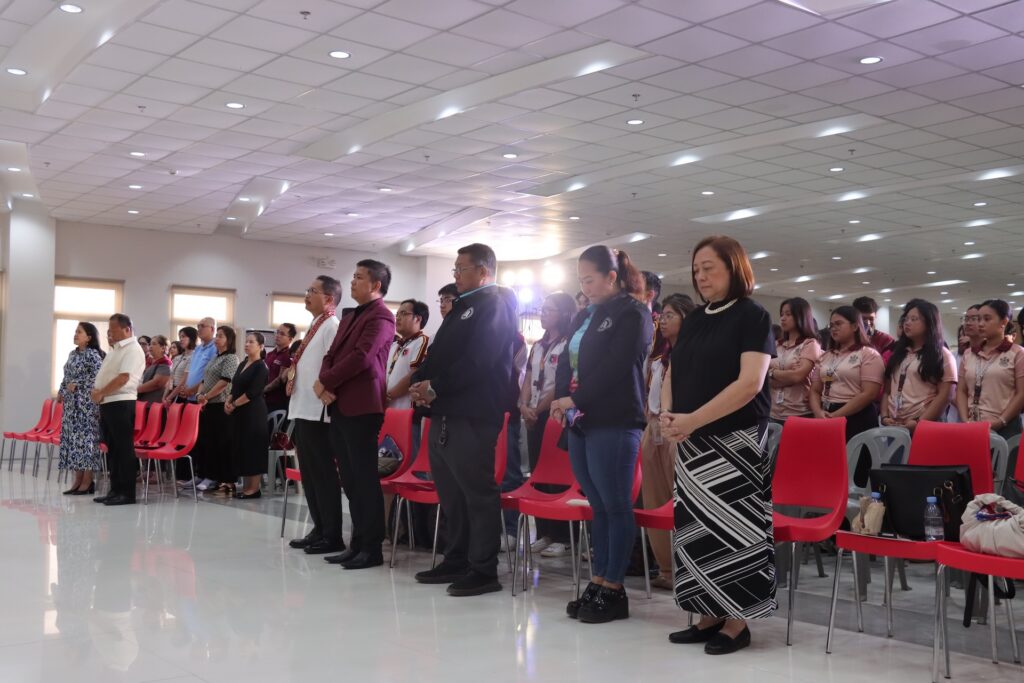
Through these engagements, the University of Batangas continues to fulfill its mission of “educating today for tomorrow.” By hosting distinguished experts from the Department of Foreign Affairs, we bridge the gap between student life and national service. Atty. Mayo expressed sincere gratitude to our guest speakers, noting that it is an honor to learn from such competent, credible, and God-fearing individuals who man our nation’s diplomatic frontlines.
The Path Toward an Inclusive Best Future
Our presence at this lecture – and more importantly, our willingness to apply the knowledge imparted – reflects our shared dedication to the Sustainable Development Goals. We are moving beyond the theoretical and into the practical, turning “international jargon” into “local reality.”
The synergy created at the UBLC Multi-purpose Hall is a spark. As we aspire toward an inclusive and sustainable future for the next generation, we must continue to work, innovate, and lead with character.
“May we remain guided by the wisdom and grace of our Almighty God, whose blessings empower us to overcome challenges and faithfully fulfill our mission. May God continue to bless the University of Batangas and all those who come through these portals.”
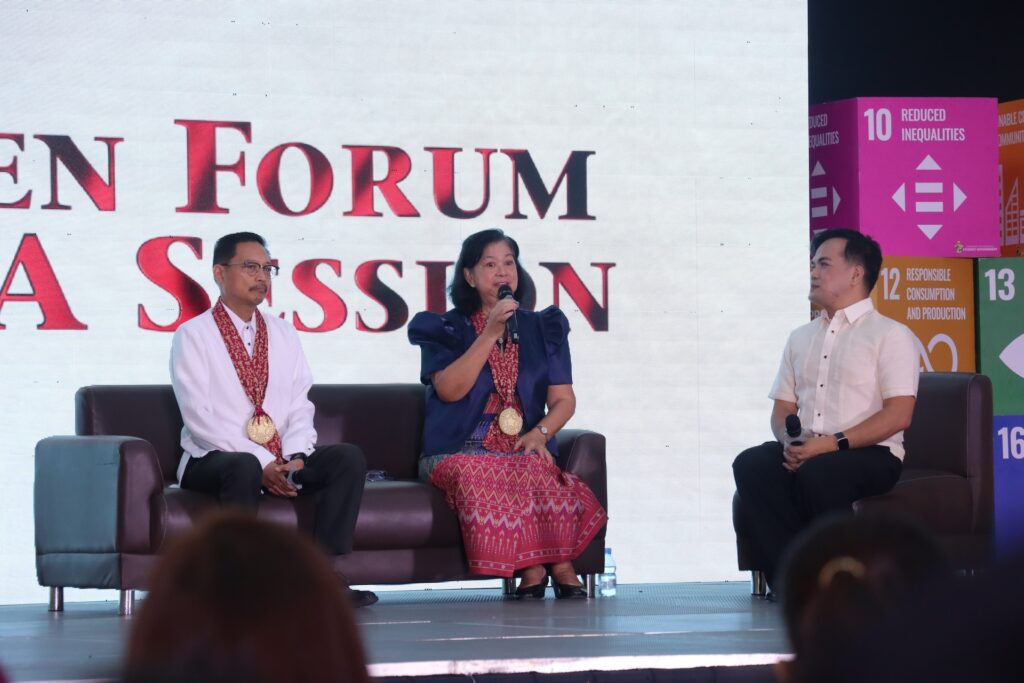
Final Reflections on What a Sustainable Future Means Now
The 80th Founding Anniversary is not just a celebration of years passed, but a commitment to the years ahead. As we return to our various fields of study and service, we carry with us a roadmap for change.
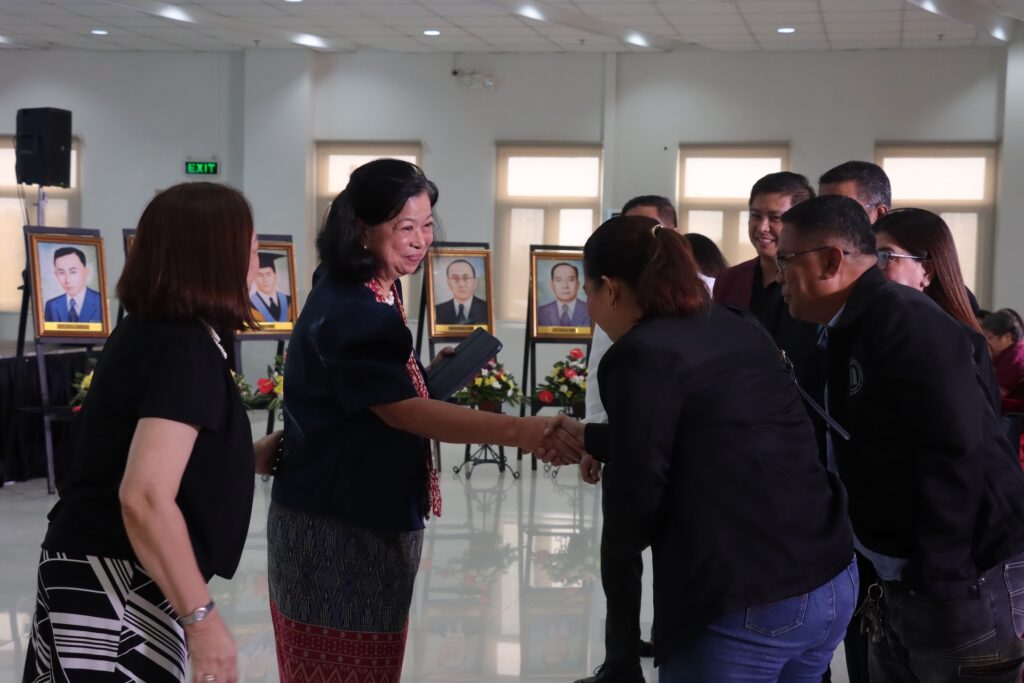
The world needs fixing, the energy is here, and the tools are in our hands. Let us move forward as one community, fueled by passion and guided by global goals, to ensure that the University of Batangas remains a beacon of excellence for another eighty years and beyond.